
By Bob Layton [BedheadBob]
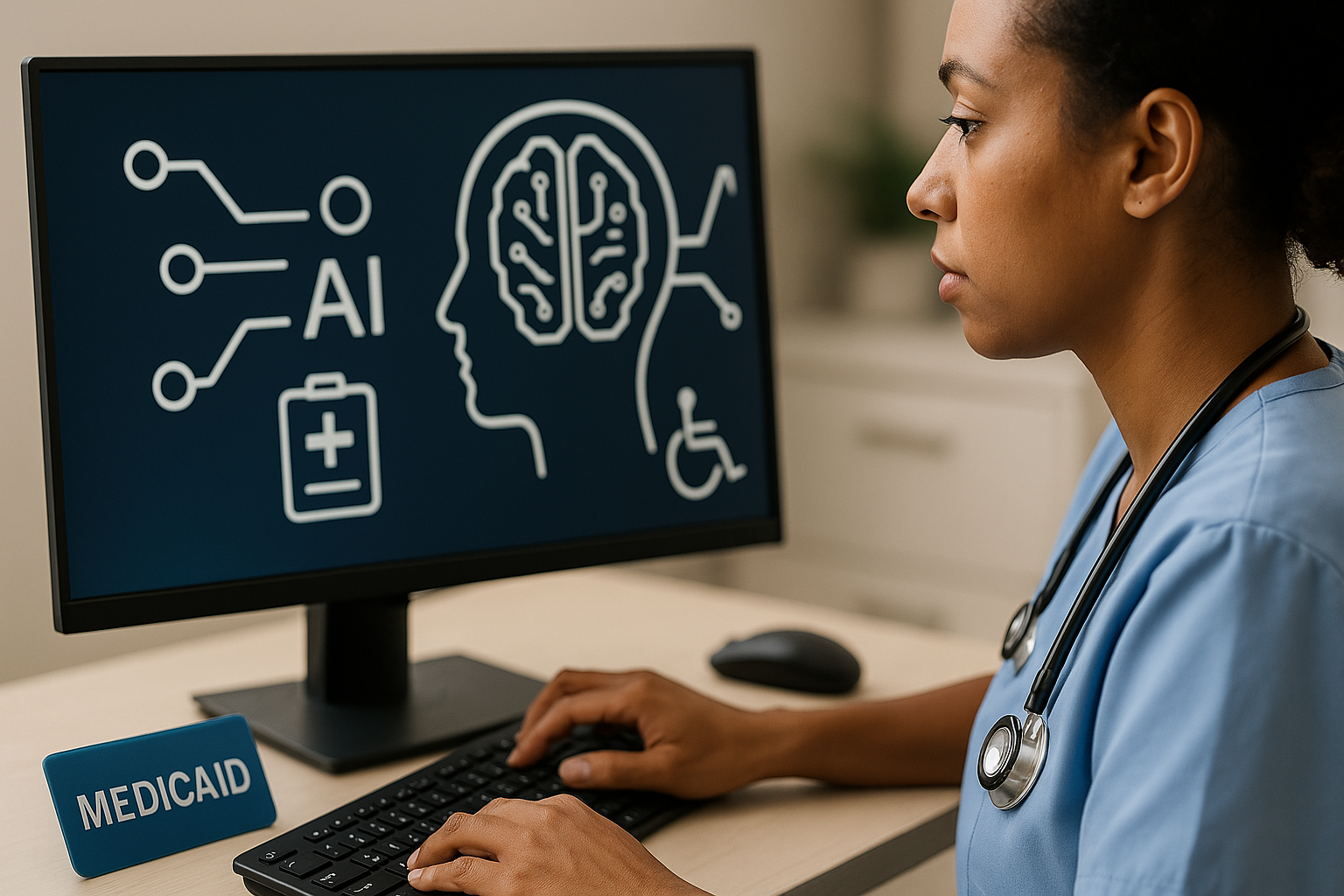
Whether you realize it or not, we are living in the dawn of a new era—one shaped by algorithms, augmented intelligence, and a shifting blueprint for healthcare. For millions of disabled Americans relying on Medicaid, that shift offers the promise of something long overdue: smarter systems, streamlined access, and care that finally listens.
Medicaid, the nation’s safety net for low-income individuals and families, serves nearly 10 million disabled people. Yet, the experience for many remains riddled with delays, denials, and daunting paperwork. Enter AI: a technology often misunderstood, but increasingly capable of transforming inefficiency into equity.
🔍 Evidence of Transformation Is Emerging Several pilot programs are already showing what’s possible. In New York, natural language processing tools are being tested to assist caseworkers in identifying coverage gaps—automating redundant paperwork and catching discrepancies that once delayed essential services. In Texas, machine learning models now help flag children at risk of missing out on speech therapy due to documentation errors, prioritizing them for faster outreach.

Meanwhile, accessibility-focused AI tools like predictive text-to-speech and personalized health apps are giving nonverbal patients new ways to advocate for their own care. For those navigating Medicaid’s often-convoluted portals, AI chatbots are simplifying enrollment and renewal processes, especially for individuals with cognitive disabilities.
Still, questions remain: Who designs these systems? Are biases being baked into algorithms? And how do we ensure AI supports, not replaces, the crucial human judgment that disabled patients often depend on?
📣 A Call to Innovate—Responsibly Policymakers, healthcare advocates, and technologists must work together to ensure AI is implemented ethically, with full transparency and community input. Advocacy organizations are now calling for federally funded research into equity-centered AI development and disability-inclusive design standards.
For disabled individuals reliant on Medicaid, AI isn’t just a tool—it’s a potential lifeline. But the promise will only be realized if systems are built with, not just for, those they serve.
If AI can learn to translate our voices, read our moods, and map the complexity of care, then surely it can help Medicaid hear us better, too.
Because equity isn’t just a goal—it’s a system we can finally begin to build.
👀 Curious what AI is already doing inside your local hospital or state health plan? RRM will be diving deeper into these initiatives over the coming weeks. Follow along as we untangle the future, one algorithm at a time.
