
If you asked someone to define “yourself,” most would instinctively say, “Me.” Maybe even with a hint of sarcasm—“Duh!” Yet, few of us stop to consider the two distinct parts that make up who we are.
According to a peer-reviewed Berkeley Well-Being article (source), we have both:
- The physical self, the part of us that interacts with the world.
- The narrative self, the internal story we tell about who we are, shaped by our past, values, and experiences.
My stroke took a part of me—literally. Locked-in Syndrome forced me to lose half of myself, setting off a journey through the many stages of grief. But grief isn’t linear. It doesn’t follow a neat progression.
Some days, I cry. Some days, I’m angry. Other days, I bargain with God, searching for meaning. And sometimes, I sink into depression. But what I don’t think I’ll ever reach is acceptance.

Certain moments trigger me—reminders of what I can no longer do. Watching life unfold without being able to fully participate can be devastating, though I do my best to hide it.
Lately, I’ve been consumed with thoughts of my daughter Lydia’s upcoming 16th birthday. It’s such a milestone—one that should be celebrated. Yet, I have no means to get her a gift, a card, or even a small token to mark the occasion. I know she’d say it doesn’t matter, but it does to me. How many more of these milestones will I witness? Maybe that’s just a thought that comes with age, but it lingers all the same.
A Nearly Tragic Event—and an Unexpected Blessing
Recently, something terrifying happened. But as it turns out, it also brought some unexpected surprises.
Let me paint you a picture. My wife Jonell, our daughter Lydia, and I live in a densely wooded area next to the Mark Twain National Forest. It’s a bit off the beaten path—especially for someone with my medical challenges—but we love it. I like to joke, “It’s not the end of the world, but we can see it from here.” (Cheesy, I know.)
One night, we had the perfect storm—or rather, the perfect fire storm. Despite high winds and warnings against it, someone nearby was burning trash. And, as I mentioned, we live in a heavily wooded area right next to a national forest.
Would you believe a fire broke out?
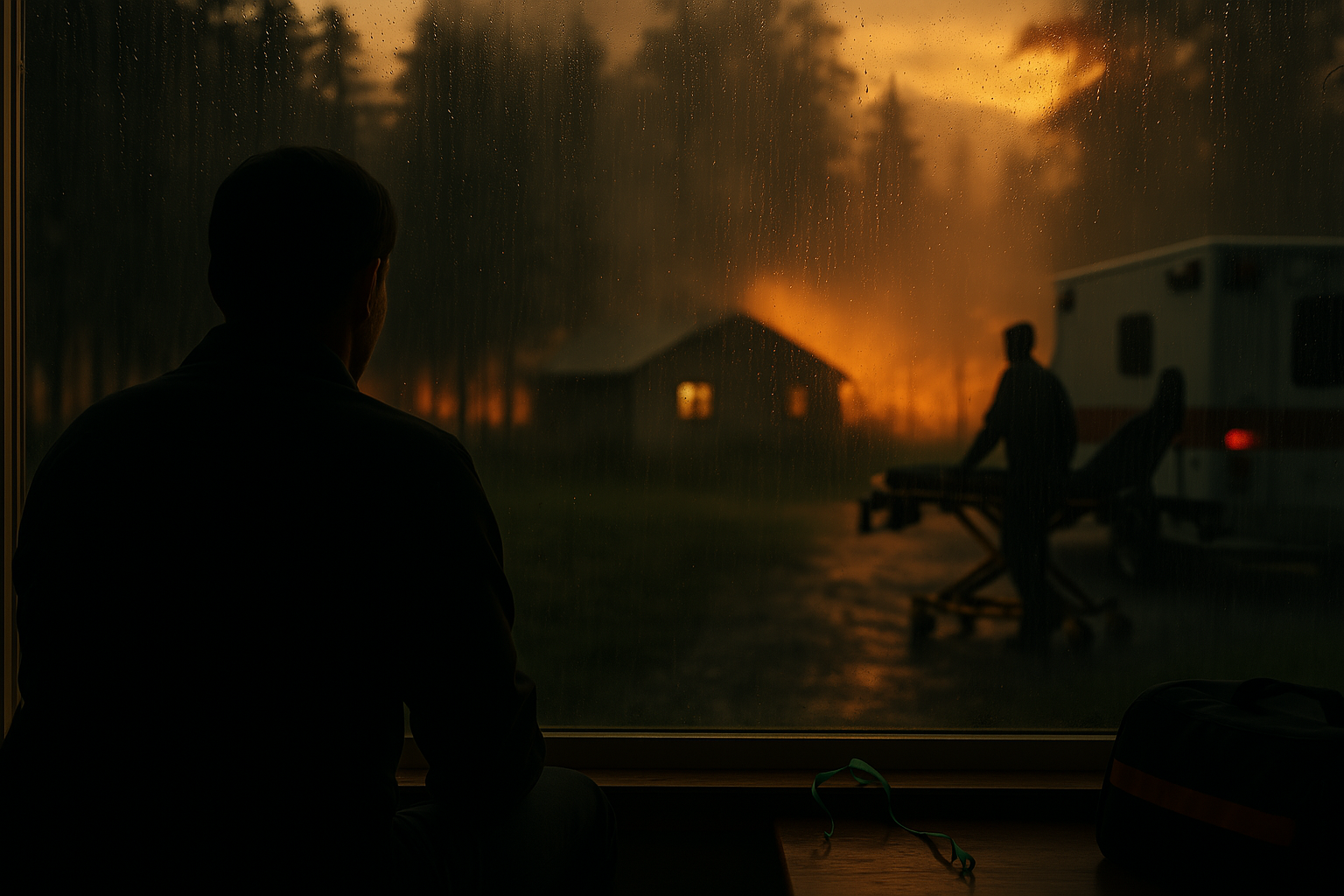
Flames came within 100 yards of our home. The smoke was thick, the fear was real, and someone was just about to hoist me over their shoulder when—out of nowhere—a sudden downpour hit. For about five straight minutes, rain poured harder than we’d ever seen in our 14 years living here. It was enough to put the fire out. Just like that, disaster was averted.
But the smoke was too much for me. I ended up in the hospital, where the surprises continued.
A young paramedic named Amy and her partner Cody were the ones who brought me home after the ER patched me up. Amy recognized me from a previous transport and struck up a conversation. She mentioned an organization that might be able to help us.
Three days later, the head of that organization, a man named Tony, and a nurse (whose name I sadly don’t remember) came to our home to assess our needs. It looks like we’re going to receive some much-needed help.
That day was terrifying. There were reports of 22 fires burning simultaneously in the area. But thanks to the brave men and women of the fire department and the paramedic squad, lives were saved.
We may have lost some trees that day, but we gained something too—hope.